
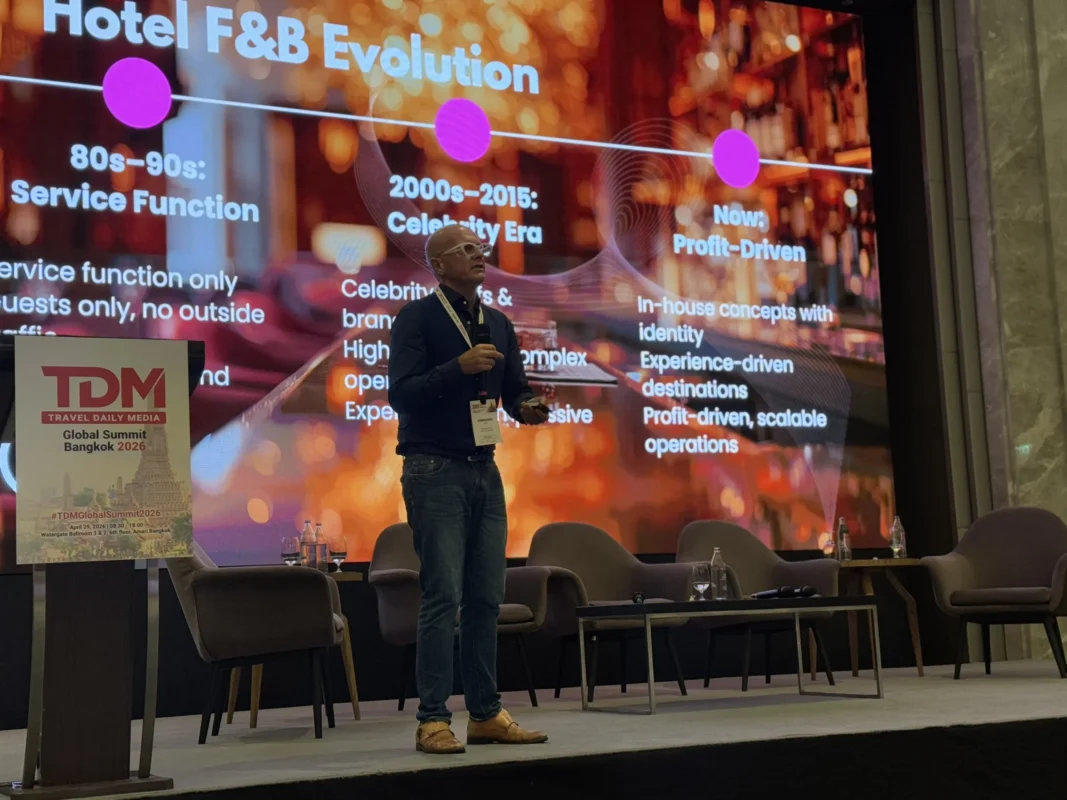
At the TDM Global Summit Bangkok 2026, Ermanno Lelli, Senior Consultant and Director at Ermanno Lelli F&B Consulting delivered a transparent message to lodge operators: Food and Beverage is now not a secondary operate however a core driver of profitability and visitor engagement.
A Shift Away from Legacy F&B Models
For years, lodge eating places and bars operated as assist features, primarily serving in-house visitors whereas contributing marginally to total profitability. Complex operations, sluggish innovation cycles, and restricted industrial focus led many accommodations to outsource F&B to exterior manufacturers, buying and selling operational ease for diminished margins and diminished management over the visitor expertise.
That dynamic is now altering. With improved operational instruments and evolving visitor expectations, accommodations are more and more reclaiming their F&B areas. What was as soon as thought-about a problem is now being repositioned as a strategic asset able to producing each income and model differentiation.
Digital-First Marketing Levels the Playing Field
The rise of social media has essentially reshaped how lodge F&B retailers appeal to and interact prospects. Marketing, as soon as depending on vital budgets and giant groups, can now be executed successfully with mobile-first content material and direct digital engagement.
This shift permits accommodations to compete extra immediately with standalone eating places and bars. By leveraging accessible instruments and real-time content material methods, operators can drive consciousness, enhance footfall, and generate incremental income with out heavy funding.
Local Spirits Take Centre Stage
Consumer demand is more and more shifting towards genuine and domestically rooted experiences. Drawing comparisons to China’s transformation of baijiu right into a premium class, the session highlighted an identical trajectory rising in Southeast Asia.
Hotels that combine local spirits into their choices can faucet into this rising desire, creating culturally related experiences that resonate with each home and worldwide visitors. This strategy not solely enhances differentiation but in addition strengthens connections with local suppliers and communities.
Low-ABV Cocktails Drive Volume Growth
Low ABV refers to alcoholic drinks with a lower-than-usual proportion of alcohol by quantity. Low-alcohol cocktails are quickly gaining traction, significantly amongst youthful customers who prioritise moderation with out compromising on expertise. This shift is influencing how accommodations design their beverage programmes.
From a industrial standpoint, low-ABV choices encourage repeat consumption and longer dwell occasions, main to elevated per-guest spend. For operators, this represents a sensible and scalable approach to align with evolving ingesting habits whereas bettering total income efficiency.
Nostalgia Returns as a Revenue Lever
Nostalgia is rising as a strong driver of F&B innovation. Concepts from the Eighties and Nineteen Nineties, together with traditional cocktails and frozen beverage codecs, are being rediscovered by a brand new technology of customers.
For accommodations, this presents a chance to reintroduce confirmed ideas with minimal funding. By combining familiarity with fashionable presentation, operators can create participating experiences that really feel each new and accessible to in the present day’s viewers.
Tequila Leads the Global Beverage Shift
Tequila and agave-based spirits are actually on the forefront of world beverage traits. Once thought-about area of interest, tequila has advanced right into a mainstream class with robust shopper enchantment and vital income potential.
As preferences shift away from heavier spirits, tequila affords a flexible and commercially efficient various. Its rising reputation makes it a key focus space for lodge bars trying to stay related and aggressive in a quickly altering market.
Simplicity is the New Profit Strategy
A key takeaway from the session is the significance of simplifying F&B choices to drive effectivity and profitability. Overly complicated cocktails and in depth menus typically enhance operational prices and sluggish service, limiting repeat consumption.
By specializing in high-quality, easy-to-execute choices, accommodations can enhance service velocity, enhance order frequency, and optimise margins. Simplicity, on this context, turns into a strategic benefit reasonably than a compromise.
The insights shared by Ermanno Lelli spotlight a broader transformation in hospitality. Food and beverage are now not nearly service—it’s about technique, positioning, and profitability.
For accommodations prepared to rethink conventional models and embrace new traits, F&B affords a big alternative to drive each income and visitor engagement in an more and more aggressive panorama.
Plan Your Trip
Compare travel options from our booking partners and find the option that fits your trip.
